A narrative musical cycle
Its 13 parts shift in scale, texture, and voice, offering a starting point for visual interpretation.
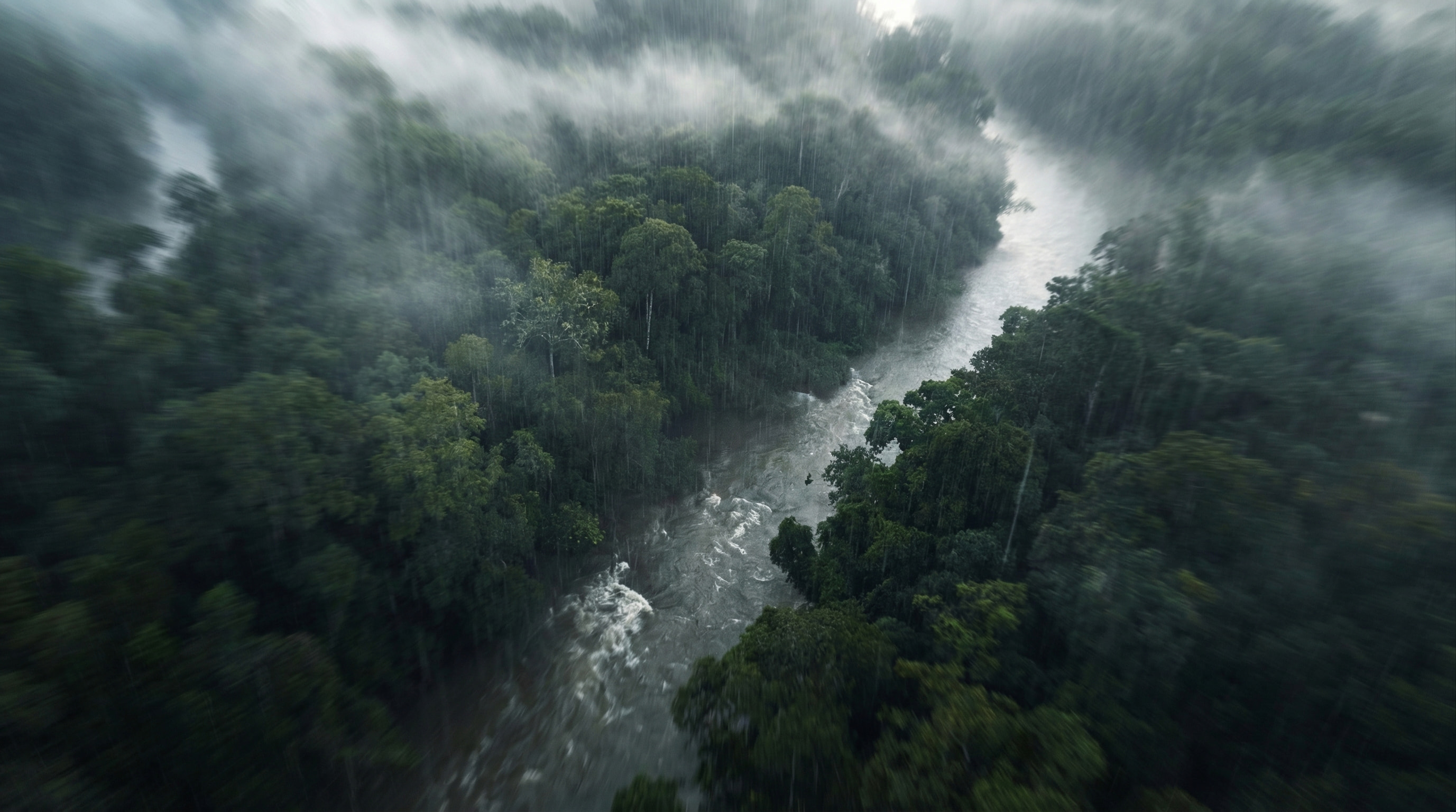
The Mayan Experience
Built from Suite Maya, The Mayan Experience is an immersive audiovisual work in development.
Music leads us toward a visual encounter with living Maya languages, places, and stories.
Maya cultures continue through languages, places, rituals, crafts, and everyday life. The Mayan Experience seeks to engage with that continuity through music and image.
The artistic source of The Mayan Experience is Suite Maya, a 13-part symphonic-choral work by Luis Manuel Portillo Lagner.
It moves through cosmogony, kingdoms, jungle, rupture, resistance, and future as a long musical line of passage through the Maya world.
The musical sourceDeveloped with support from Mexico's Ministry of Culture (SNCA), Suite Maya was shaped through years of research, languages, archaeology, and encounter with place.
It carries ceremonial force, cinematic breadth, and the texture of living memory into a contemporary musical language without severing itself from the ground it comes from.
The suite gives the immersive work now in development its musical and narrative starting point.
A narrative musical cycle
Its 13 parts shift in scale, texture, and voice, offering a starting point for visual interpretation.
A work of sound, language, and presence
The orchestra and choir do not represent the past: they invoke it. Pre-Hispanic instruments and Maya languages enter a sonic language that remains contemporary without losing its roots.
A door opened by music
There are works that entertain, and there are works that open a door. Suite Maya belongs to the latter: a musical source that asks to be heard, and also inhabited.
The Mayan Experience is being developed as an immersive audiovisual continuation of Suite Maya, translating its music into a spatial encounter.
Music leads the process. We are developing visual language, atmosphere, and space in dialogue with the score, so that sound can open into image, movement, and immersion.
We intend the work to travel across venues while retaining its musical center and making room for careful cultural collaboration.
We want audiences to encounter the music of Suite Maya alongside living Maya languages and knowledge. The visual work is still taking shape, and the people, places, and perspectives it draws on call for care.
The work begins with the suite and continues through listening, research, and collaboration as its visual form develops.
Pulse · Language · Sound · Continuity · Presence · Time